
Operation Lam Son 719: An Overview
The Plan
The planning of the operation largely fell on the ARVN, a task that had usually been left to the American forces. The plan had three phases. In phase one, known as Operation Dewey Canyon II, combined U.S. and ARVN forces would open Route 9 up to the Laotian border and reoccupy the Khe Sanh Combat Base. This phase would open up space to provide a staging area for subsequent phases.

Map of planned operations for Lam Son 719.
Created by Vincent Puglisi for Time Magazine
In phase two, ARVN forces would move west along Route 9 to secure Tchepone, a key Laotian logistical hub. Simultaneously, divisions of the ARVN would, via helicopter, establish firebases to the north and south of the Xepon River valley to secure the flanks as other ARVN forces advanced towards Tchepone. The destruction of Tchepone would, in theory, sever the Ho Chi Minh Trail and severely limit North Vietanam’s offensive operations.
In phase three, the ARVN would move down Route 914 southward and destroy another logistics hub called Base Area 611 before returning to South Vietnam. The catch was that U.S. ground forces, thanks to a congressional order, were confined to South Vietnam. While the U.S. could provide air support, the ARVN would assume full responsibility for the success of the operation.
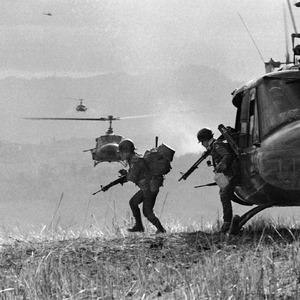
ARVN forces land in Laos, February 1971
The Operation Unravels
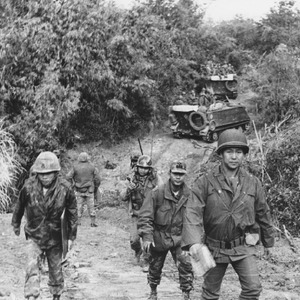
ARVN soldiers patrolling Laotian road
Phase one of the plan succeeded, with American and ARVN forces retaking Khe Sanh with minimal casualties. However, early success faltered quickly, with inclement weather and dysfunction among the ARVN command halting the operation’s momentum. With the element of surprise gone, the operation became a battle of attrition. Due to the ARVN’s delays and dysfunction, the PAVN turned the tide of battle, launching an effective counter-offensive.
Despite the token capture of Tchepone, the operation had become a trap. The PAVN quickly compromised Route 9 and took out the new firebases, cutting off the ARVNs escape routes. The operation then turned into a desperate extraction campaign, with the ensuing withdrawal becoming a bloodbath as ARVN units struggled to make it back across the border.
45 days after the operation had begun, the last ARVN units crossed back into South Vietnam, marking the end of the disastrous operation. A few weeks later, Khe Sanh had been abandoned—all meaningful U.S. and South Vietnamese gains had been lost.