
Tet Perspective: Ms. Bobbie Keith
Bobbie Keith worked as a secretary for the United States Agency for International Development (USAID) and the Armed Forces Vietnam Television. While serving in Vietnam from 1967 until 1969, she became well-known as a television figure, “Bobbie the Weather Girl.”
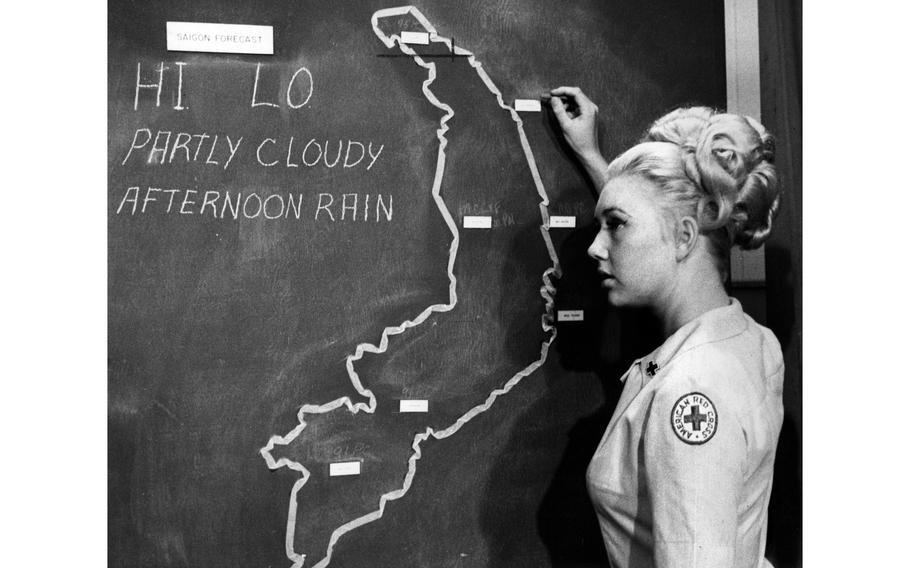
When the Tet Offensive began, Ms. Keith lived at the Excelsior Hotel in Saigon. On the first morning, she wasn’t allowed to leave the building for work. Standing amidst people in the foyer telling various stories of what had transpired, she could hear the battle noises across the city.
While sequestered in the hotel, sometimes the women would make food or pack lunch boxes for battalions. While delivering lunches, Ms. Keith witnessed barricades and shootings in the city. One day, Ms. Keith noticed reeking mounds of garbage heaped on the streets, as nobody was collecting garbage at the time. She watched a Viet Cong man hiding in a garbage pile blast a man off of a telephone pole.
After about three weeks of little-to-no movement allowed, the restrictions were lifted. At this point, military forces and refugees flooded Saigon. The Third Field Hospital was overloaded, a blood donor program was set up, and casualties were announced. Ms. Keith lost some of her colleagues at USAID during the offensive.
Ms. Keith saw the aftermath of Tet as a turning point. After the explosions and gunfire had settled, Ms. Keith explains in her oral history:
“...you start thinking. What is this all about? Is it really worth it?”1
Ms. Keith recognized that she only began to question the domino theory and her role in the war after Tet. Others around her did the same. Once this epiphany arrived, the devastation was clear.
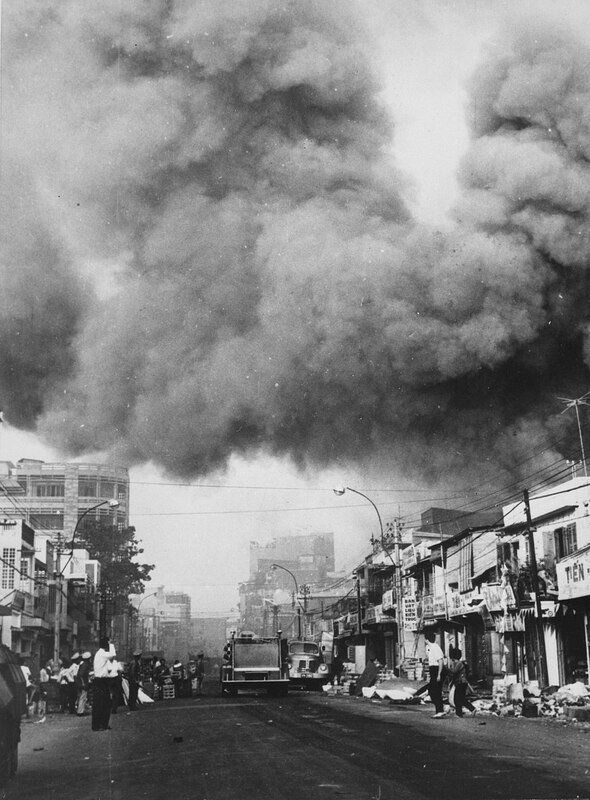
Bobbie Keith’s civilian account gives a rare perspective on the Tet Offensive. Many soldiers admit that they didn't see the larger picture of the war—the true horror of it—since they were so focused on keeping themselves alive. Ms. Keith, however, became increasingly aware of the wider picture, making her recollections especially valuable.
Ms. Keith’s account supports Moïse’s opinion that the destruction of Southern infrastructure was exaggerated. South Vietnam did not face irreparable damage after the attack. Living in Saigon, Ms. Keith witnessed a city at heart of the attack. Nonetheless, once Tet ended, she went back to her job and life as it was before. She continued working and going out to dinner. When Ms. Keith explained how destruction affected her life throughout the war, none of the experiences she mentioned stemmed from the Tet Offensive. The only lasting impact she attributed to Tet were “ominous feelings” around the city.
Ms. Keith’s experience also supports Moïse’s argument that the Viet Cong did not immediately fall after the offensive. Ms. Keith reports that she was sequestered in her hotel for nearly three weeks and only let out once the attacks had subdued. Clearly, at least in Saigon, the Viet Cong showed persistence in fighting. It was not a quick and easy process for the Americans to regain the city.
1Bobbie Keith, Interview with Bobbie Keith, interview by Steve Maxner, Bobbie Keith Collection, Vietnam Center and Sam Johnson Vietnam Archive, Texas Tech University, April 11, 2001, https://www.vietnam.ttu.edu/virtualarchive/items.php?item=OH0159.