
Navigating War: OCS Junior Officers in Vietnam
“The reason for the OCS program was the Army didn’t have enough officers for Vietnam. They were dying faster than they typically would, and there were also a lot of new units being organized.”
David A. Whaley; Commander, Detachment #3, U.S. Army Marine Maintenance Activity, Da Nang, Vietnam

Brown Water Navy
As US involvement in Vietnam escalated—from President Kennedy's increase in aid and military advisors to South Vietnam, to President Johnson's full-scale Americanization of the war in 1964/65—OCS became a pipeline to producing and rapidly training officers to meet the growing demand for military leadership. Unlike the service academies or ROTC, which entailed years of training for completion, OCS offered an expedited route for producing junior officers that could be quickly sent to Vietnam. By the height of the war, over fifty percent of junior officers were commissioned through OCS, which demonstrates the crucial need for sustaining the officer corps. Simply put by retired US Army Maj. Gen. David A. Whaley, a graduate of Fort Eustis TOCS (Transportation Officer Candidate School) who joined the Army as a Private and retired as a Major General, “The reason for the OCS program was the Army didn’t have enough officers for Vietnam. They were dying faster than they typically would, and there were also a lot of new units being organized.”
Historian Ron Milam notes that junior lietenants, in particular, had some of the highest fatality rates during the Vietnam War. Many were put at high risk in the frontlines with limited experience, and were killed at twice the rate expected for a troop's combat strength. Milam highlights examples of efficiency by junior officers in the Army despite the OCS-graduate Lietenant William Calley's role in the My Lai Massacre in 1968.
Additionally, General William Westmoreland's emphasis on body count as a measure of battlefield success added a layer of pressure for junior officers while distorting the realities many soldiers faced. The body count statistic was used primarily with the Army and Marines; meanwhile, naval officers played a role in intercepting supply routes, building and managing shore facilities, supporting ground operations, conducting coastal actions, and providing logistical support.
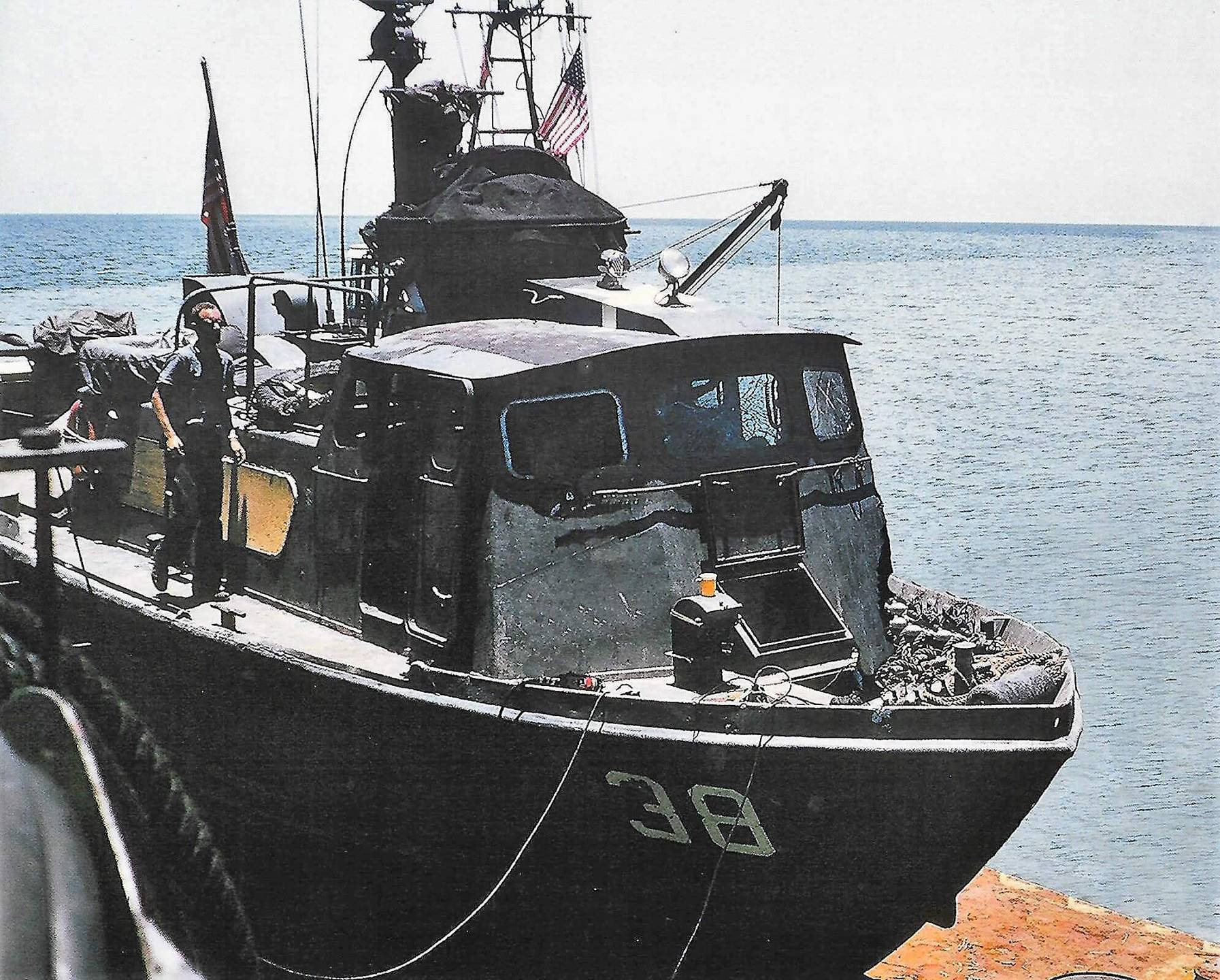
Swift Boat Patrol
Some key forces in the Navy during the Vietnam War include the Blue Water Navy, Swift Boat Patrollers, and Brown Water Navy—riverine warfare. Created in response to the insurgency by the Viet Cong and the North Vietnamese Army, the Brown Water Navy was tasked with disrupting their supply routes through rivers and coastal waters, limiting the transportation of weapons, troops, and other aid. A notable component of the Brown Water Navy were the Swift Boats, small and long aluminum vessels that operated in shallow and coastal-water areas. Meanwhile, the Blue Water Navy operated in deeper and open waters, providing offshore firepower and carrier-based air operations; this was most notable during President Johnson's Operation Rolling Thunder campaign that launched an intense bombing program to inhibit North Vietnam's insurgent capabilities.