
Vietnamese Catholics During the Vietnam War
“After the overthrow of President Diem, our village became a sharp thorn for the new regime, which considered us to be from the old regime because we were Catholics. They connected us with the political party of one of President Diem’s brothers. Angry students came into our village and burned it.” – Mr. Liem, South Vietnamese refugee

Referendum Diem v. Bao Dai
The 1955 referendum that brought Ngô Đình Diệm to power initially bolstered support among Vietnamese Catholics, who saw him as a protector of their interests.
In 1955, Ngô Đình Diệm became president of South Vietnam (Republic of Vietnam, RVN) through a rigged election against Bảo Đại. Initially, many Vietnamese Catholic evacuees supported Diệm because of his Catholic background. However, disappointment grew as Diệm did not prioritize reunifying Vietnam and began showing authoritarian tendencies. He forced most evacuee organizations to disband and scattered them across more than 300 villages in southern Vietnam.
Determined to continue their mission, the evacuees took matters into their own hands. They commemorated the signing of the Geneva Declaration as the "National Day of Shame," reminding everyone that the war was not over. Many evacuees used newspapers, films, and media to share stories about communist crimes and the impact of the war. They also formed self-defense militias, and some even participated in two of three attempted coups against Diệm.
After Diệm was assassinated in 1963, South Vietnam fell into chaos, experiencing four coups and eight different governments in a short period. This instability allowed North Vietnam to ramp up its war efforts. Meanwhile, Buddhist activists began protesting against discrimination and calling for a ceasefire, leading to tensions with some of the evacuees.
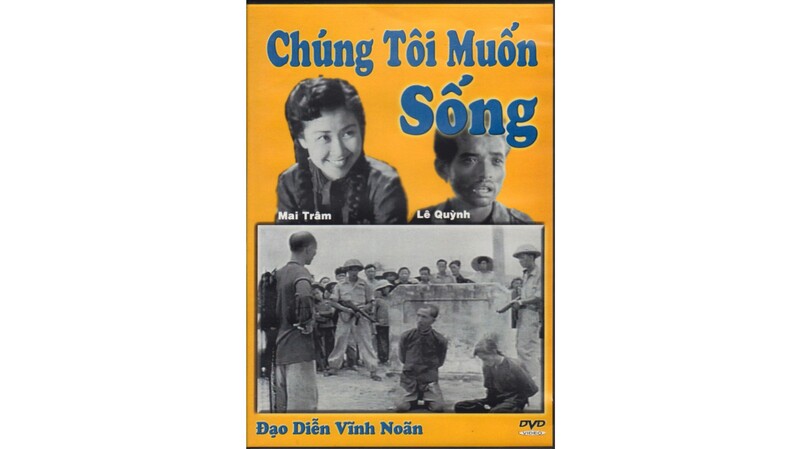
Chúng tôi muốn sống movie poster
This movie, a collaborative effort by Vietnamese evacuee Bùi Diễm, a Filipino crew, and American funding, depicts a young PAVN soldier's disillusionment with the Communist Party and his desperate escape from a village torn apart by land reform and political control.
When international voices, including France and the United Nations, called for a ceasefire, many evacuees opposed it. With instability in Saigon and communist threats from both the north and the south, many Catholics felt their fight had become not just political but a struggle for survival. However, within the Catholic community, opinions were divided, as some Catholic leaders also called for peace.
The Vietnam War escalated with U.S. intervention in 1965, but instead of unity, it brought devastation and rising civilian casualties. The 1968 Tết Offensive exposed South Vietnam's vulnerability, leading to new peace initiatives. However, many evacuees remained cautious about negotiating with the communists, fearing a repeat of past failures like the Geneva Accords.
By the early 1970s, even staunch anti-communist Catholics began to call for peace. Many felt betrayed by U.S. President Nixon's "Vietnamization" policy, which signaled that South Vietnam would need to defend itself without American military support. Corruption scandals in President Nguyễn Văn Thiệu’s administration further eroded support for the RVN, as the government seemed more interested in personal gain than achieving independence and sovereignty.
Nixon’s visit to China in 1972 and the release of the Pentagon Papers in 1971, which exposed U.S. propaganda tactics, deepened the evacuees' distrust of American motives. By 1975, as communist forces advanced, Catholic evacuees called for international help, but their pleas went unanswered. When Saigon fell on April 30, 1975, they had to face the reality of a unified Vietnam under communist rule.