
Faith Across Borders: Vietnamese Catholics in Exile
Many Vietnamese Catholics who fled the north in 1954 found themselves displaced again in 1975 when the Democratic Republic of Vietnam (DRV) captured Saigon. Those who remained in Vietnam faced harsh conditions under the new communist regime. Many were sent to reeducation camps. The regime maintained a complex relationship with the Catholic Church, allowing limited religious freedoms to maintain international relations while imposing strict controls and nationalizing Catholic schools.

To escape these harsh conditions, many Vietnamese Catholics fled immediately after the fall of Saigon in 1975 by plane or ship. Others left between 1978 and 1979 via land and sea routes during the "boat people" crisis. The first wave of refugees often found safety through sponsorships by Catholic churches in the United States.
“Instead of walking across the bridge, the Vietnamese people competed, pushed each other to get across first. They even shoved the priests!” — Ba That, South Vietnamese refugee
“The first wave of refugees was primarily sponsored by Catholic churches. My uncle was part of this wave and was sponsored by a church in Kansas City.” – Trey Pham
In refugee camps such as Pulau Besar Camp, Catholicism remained a central part of daily life, offering both spiritual solace and practical support. These camps often included makeshift churches, schools, and language centers. For many, the church became not only a place of worship but also a vital community hub, providing education and support. Trey Pham, who spent part of his childhood in a refugee camp, shared how his faith became an anchor during this uncertain time:
“I remember, it was big enough, and they even had a church that was built out for all the refugees. And we would go to church practically every day… That’s how I received my First Communion.” – Trey Pham
The church was more than a spiritual refuge; it played a critical role in helping refugees adjust to their new circumstances. English lessons organized by volunteers were often held at the church itself.
“We enrolled ourselves in English lessons, organized by a few people who knew the language and volunteered their services… at the Catholic church on the hill.”
Catholicism also provided vital networks for resettlement through sponsorships and communication. Organizations like Catholic Relief Services (CRS), which had been active in Vietnam since 1952, facilitated these efforts by offering aid and helping refugees connect with family members who had already settled in the United States. Many families searched for lost loved ones through Catholic newsletters, as Trey Pham described:
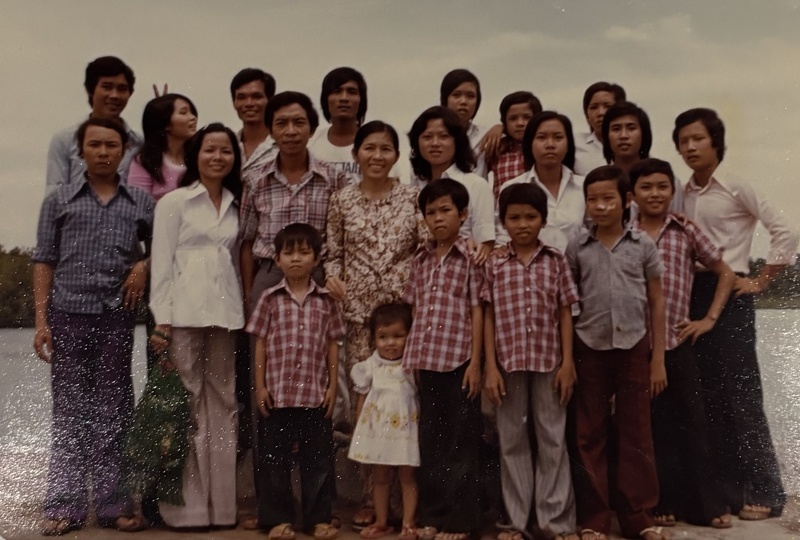
“A lot of it was just posting ads in Catholic newspapers… My name is so and so, I’m looking for so and so…”
Vietnamese priests and seminarians played a crucial role in supporting Catholic refugees during their resettlement. The clergy not only provided spiritual guidance but also helped maintain Vietnamese cultural traditions. Many of these religious leaders were young, between 30 and 45 years old, which allowed them to provide sustained leadership in the emerging Vietnamese Catholic communities across the U.S.
During and after the initial shock of adjustment, this group offered long-term stability to Catholic refugee communities. Despite the challenges of isolation and adapting to a new culture, they helped create a sense of order amidst the refugees' turbulent lives. They also shared the profound sense of exile, viewing themselves not as American aspirants but as exiles hoping to return to a communist-free Vietnam.