
Life as a LRRP: Beyond the Battlefield
Social Dynamics of LRRP Units
Everyone that goes, comes back. We don’t leave anybody. So if not everybody can come out, we all stay. That’s the hard rule.” - David L. Flores
The small size of LRRP units influenced their social dynamics. For instance, Holmen’s LRRP unit — Romeo One-Eight — consisted of four men: Sgt Gary Heald fom Tulsa, Oklahoma, who attended Ranger School at Fort Benning and served as team leader; Spec 4 Robert Holmen from Upsala, Minnesota, who served as assistant team leader; PFC Billy Powers from Dallas, Texas; and PFC Mark Estopare from St Louis, Missouri. Similar in age, Holmen spent most of his time with Heald, while Estopare and Powers were particularly close. However, all members shared a strong sense of camaraderie and respect for each other, which translated to teamwork in the field.
"I can’t even begin to explain (...) how much they loved each other" - Gary Dolan
Camaraderie is a common theme among oral histories of LRRPs. Many attribute the success of their missions and their very survival to their ability to collaborate smoothly in high-stakes situations. Given the precarity of LRRP missions, trust was especially important in ensuring that the team functioned as a cohesive unit. Sgt David L. Flores emphasized how members of his LRRP team knew each other’s strengths and weaknesses very well and covered for each other when needed. As a platoon leader, Gary Dolan expressed a similar sentiment: respect for fellow LRRPs and Rangers was something that continued throughout Dolan’s life, decades after finishing his service.
“He had a lot of experience out in the field, and I was comfortable going out with him” - Terry Massey, on his LRRP team leader.
Another factor that influenced the social dynamics of LRRP units was leadership. Every LRRP team had a designated team leader and an assistant team leader. Many LRRPs convey admiration for their team leaders, acknowledging the crucial role they played in responding to situational changes and ensuring each member’s safety in every mission. At the same time, team leaders bore great responsibility towards their members. This relationship of mutual respect within the LRRP unit served as an accountability mechanism, where each member strove to protect one another.

PFC Billy Powers

PFC Mark Estopare

Assistant Team Leadr, Spec-4 Robert W. "Obie" Holmen
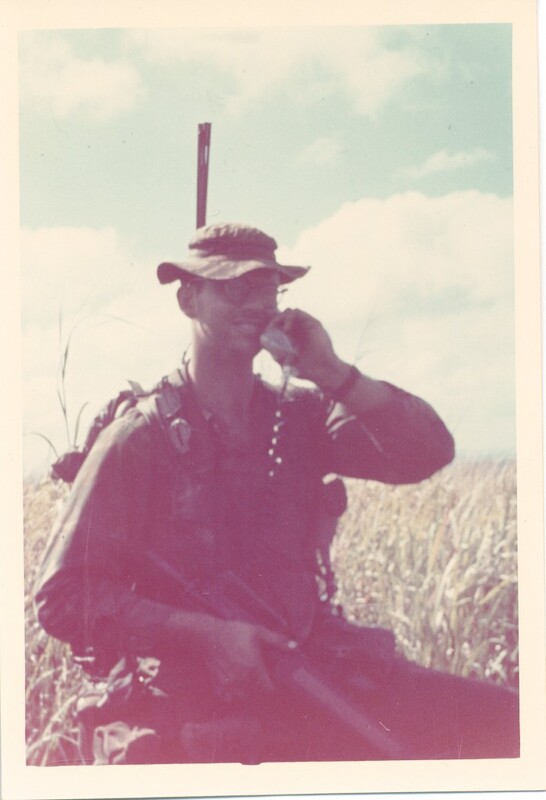
Team Leader, Sgt Gary Heald
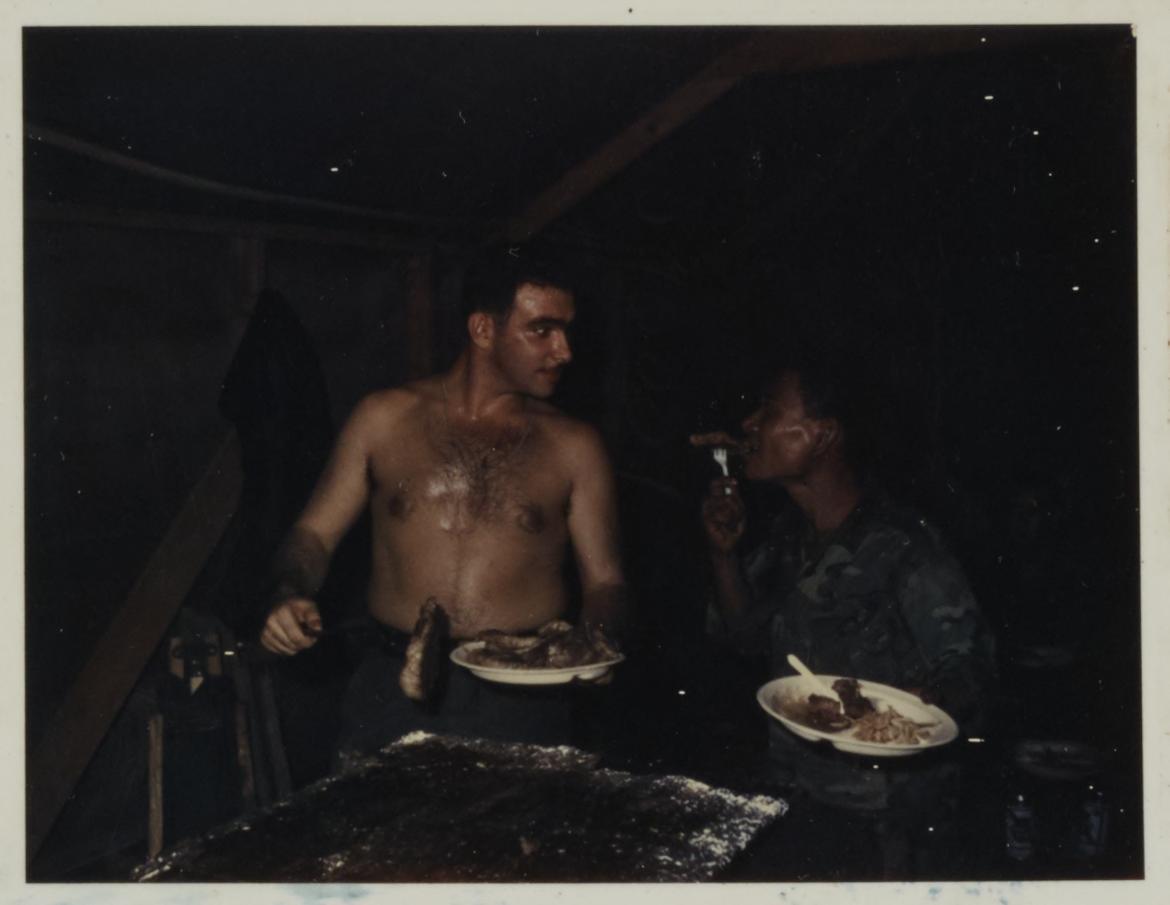
Photograph of a barbeque at a LRRP base camp
Life in the Rear
There was more to the LRRP experience than being in the field. After a mission, LRRPs were allotted several days in the rear. Holmen noted that a general rule was spending four to five days on a mission and then three or four days in the rear. However, this was not always the case, as LRRP teams could get extracted earlier in cases of contact. Life in the rear was seen as a positive experience by many LRRPs. The close-knit culture of LRRPs on the field translated to the rear, as teammates frequently spent their free time together. There was plenty of entertainment, from card games to parties. Life in the rear provided a sense of normalcy and stability to LRRPs in an otherwise volatile environment.
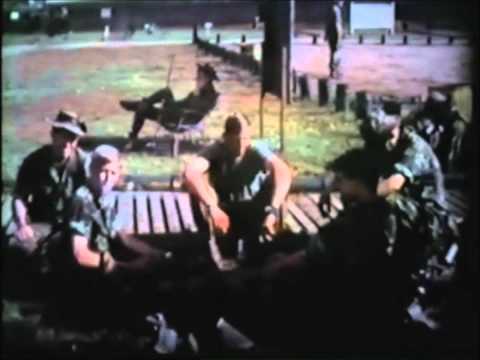
Video of LRRP Rangers in Vietnam Base Camp (Part 1)
Video taken by Obie Holmen between 1969-1970 using a Super8 camera he bought in a PX in Vietnam

Video of LRRP Rangers in Vietnam Base Camp (Part 2)
Video taken by Obie Holmen between 1969-1970 using a Super8 camera he bought in a PX in Vietnam