
LRRP in Action: Realities of Combat Experiences
Overview of LRRP Missions
“The duties, the missions, didn't change. It was always the same. It was always four-man teams sent via helicopter into hostile territory for the purpose of reconnaissance to determine if there is enemy activity here.” - Obie Holmen
While no two missions were the same, LRRP missions generally involved the dispatching of small teams into enemy territory to gather intelligence. Given their lack of manpower, LRRP teams relied on stealth to avoid contact with the enemy. In the case of an encounter with the enemy, LRRPs could make radio contact and, depending on the situation, request extraction or support. Support took various forms, from targeted artillery barrages to helicopter gunships. There were various intelligence objectives for these reconnaissance missions, including finding trails, signs of VC or NVA activity, or physical infrastructure such as base camps or bunkers. The territories where LRRPs operated were designated “Free-Fire Zones,” and it was assumed that non-combatants had already been evacuated from the area. However, this was not always the reality, contributing to the uncertainty faced by LRRPs.

Photograph of two LRRPs in action, camouflaged in the jungle
Preparations for a mission started one or two days before dispatch. Shortly before a mission, the team leader and the assistant team leader would fly out in a helicopter to get a visual understanding of the target terrain and locate a practicable landing zone (LZ). The day before the mission, members of the team would load their rucksacks with the necessary equipment, weapons, and ammunition. On the day of the mission, LRRP teams — wearing camouflage and face paint — flew out on a helicopter and were dropped off at their designated LZ. Depending on the terrain surrounding the LZ, LRRPs occasionally had to jump off the helicopter four or five feet above the ground. Ensuring their communication equipment functioned properly, LRRPs picked a vantage point and prepared a night location (NL). When there was no contact, missions usually would last four to five days before the LRRP team was extracted via helicopter.
An Impossible Dilemma: Stories from the Field
"I don't remember how many there were--4, 6, 8. I just don't remember for sure. But they had no idea how close they came that night" - Obie Holmen
Gary Dolan
As a platoon leader, Dolan joined LRRP missions with a different team every month. On one of his missions, Dolan’s team was shot at by an MG 51 machine gun. Because the MG 51 is a non-mobile weapon, the LRRP team assumed that there was an enemy bunker nearby. Upon further inspection, they uncovered a hidden enemy base camp inside a mountain with a hospital and a training complex. The LRRP team decided to employ a “hopscotch” strategy, where half the team opened fire and the other half moved back and called for air support.
Obie Holmen
While Dolan’s LRRP team was able to clearly distinguish enemy combatants, during one mission Holmen’s team was faced with the challenge of discerning whether Vietnamese men they encountered in a free-fire zone were enemy combatants. As the LRRPs were setting up a night location at the side of a ridge, Holmen’s team heard voices coming toward them. Flopping down on their bellies, each member of the team instinctively took protective measures: Obie grabbed the detonators for Claymore mines, team leader Gary laid fragmentation grenades, and two other members prepared to fire their rifles. Watching through the grass, they saw a group of four to eight Vietnamese people walking by, completely unaware of the LRRPs' presence. Noticing the group’s lack of awareness, the LRRPs decided not to launch an attack.
The scenario played out differently on another mission. As Holmen and his team were waiting in a landing zone, they received notice that the helicopters sent to extract them had been diverted. The team was not getting picked up that day. Forced to spend the night in a more vulnerable position, Holmen’s unit spotted a man washing himself in the river while several other men crossed the river and disappeared into the grasslands. This was surprising, given that the area was classified as a “free-fire zone.” Intending to take the man as a prisoner of war (POW) for intelligence gathering purposes, their unit developed two plans: Plan A was to shoot at the water, call out “stop” in Vietnamese, and capture him; Plan B was to shoot him in the leg and capture him. However, things did not go according to Plan A nor B: despite the LRRP team’s warning to stay still, the man ran upon hearing the warning shot. In a state of panic, two of the LRRP unit members shot and killed the man. In the aftermath, the team was instructed by base to check the deceased man’s body. They did not find any documents or weapons.
The Logic of Violence in LRRP Missions
The logic of violence in LRRP missions was shaped by the geography of enemy terrain, the small size of LRRP teams, and the structural conditions of warfare in the Vietnam War. Not only did the small size of LRRP units put them at great risk in the field, but the difficulty in distinguishing enemy combattants from civilians—even in free-fire zones—added to the precarity. Because seconds could determine the difference between life and death when navigating enemy territory, violence was deeply embedded into the routine life of LRRPs. The frequent deployment of violence came at a heavy physical and psychological cost, as many LRRPs continue to grapple with their decisions decades after their service.
"Still, to this day, have no idea who he was, what he's doing out there, if he was an enemy, or if he was just a mountain kid who lived out there. And we don't know. It's another thing that haunts me." - Obie Holmen
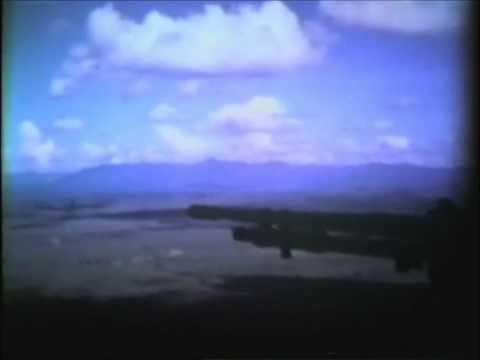
Video of a LRRP Pre-Mission Helicopter Flyover
Video taken by Obie Holmen in 1969-1970 using a Super8 he bought in a PX

Video of LRRP Rangers Mission
Video taken by Obie Holmen in 1969-1970 using a Super8 he bought in a PX

After Action Report for Operation Uniontown III - Company F (LRP) 51st Infantry
An "After-Action Report" which includes key information regarding the result of a particular operation taken by a LRP unit from Company F, 51st Infantry. Many of these reports are declassified and uploaded in the National Archives.