
Paths to the Sky

Towanda, PA, where Michael Beahan grew up.
I. Education and background
While American and Hmong Air Force members both received opportunities to pursue higher education, their familial backgrounds and contexts were very different. Michael Beahan grew up in working-class and rural Towanda, Pennsylvania. As the son of an Air Force officer, Beahan moved often, living in Florida and going to high school in Germany. Going to college was an assumed next step after high school, and despite little knowledge, he settled on Penn State because the in-state tuition was a “good deal.” Beahan had a classic college experience, acting as president of his fraternity and playing on the rugby team. At the time, ROTC was mandatory and Beahan entered Advanced ROTC due to personal interest, financial benefits, and as a natural step for a member of a military family. Mike Cavanaugh, a Raven pilot, also followed an assumed path through college, being placed by the Airman Education Commissioning Program at Syracuse University after some years at a military academy. For these Americans, higher education was not only accessible but in many cases intertwined with military training, setting them on a pipeline for officer roles.

A Hmong Village in Northeastern Laos.
Prior to their involvement in the military, most Hmong in Laos lived in the isolated, mountainous northeast region, where rural agriculture dominated. Their social and economic activities revolved around their immediate village and the surrounding fields, where they worked to sustain their families. As an ethnic minority, the Hmong had limited access to formal education, but the 1960s marked a turning point for Hmong educational access, largely due to USAID programs that expanded schooling opportunities to remote Hmong villages. Many of the Hmong men who later became pilots grew up during this period of increased access to formal education. Oral histories from surviving pilots reveal a strong desire to obtain an education, often with the goal of securing political appointments that could improve their socioeconomic status. The educational backgrounds of Hmong varied widely, ranging from as little as a third-grade education to a completed undergraduate degree, though most had only a middle school education. Like the American system, the Laotian government provided full scholarships for those who gained admission. However, upon completing their studies, Lao graduates were required to serve either as teachers or soldiers, leaving them with limited career options.
II. Reasons and Rationale
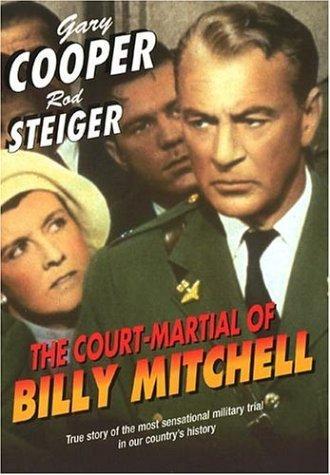
A movie poster for The Court-Martial of Billy Mitchell, representative of the types of movies that influenced popular culture imaginations around the Air Force.
Both American and Hmong Pilots were drawn to aviation in part due to the perceived romanticism of the job. Michael Beahan recalled being fascinated by the fighter pilots he encountered through his father’s service, viewing them as a “fun-loving group” who all seemed to drive sports cars and party, aspects that were attractive to him in his youth. This allure of camaraderie, adventure, and elite status extended to other American pilots like Mike Cavanaugh, who recalls movies like The High and the Mighty and The Court-Martial of Billy Mitchell shaping his imagination of pilots and the Air Force. Social prestige also played a significant role for Hmong pilots, though their status was tied to economic mobility rather than the vision of American popular culture. Koua Xiong described the rewards of becoming a pilot as significant: “If you were lucky and performed well, you would gain respect, you would become popular and famous, and they paid you well.” Pilots in Hmong villages were admired for their uniforms, wealth, and social standing. Another Hmong veteran, Ya Lee, recalled how the community saw pilots: “you see them and they were handsome and rich. Girls were crazy about them.”
Additionally, American pilots and air force personnel saw involvement in the Secret War as a way to be “in the fray,” as Cavanaugh describes. Beahan actively pursued a role in intelligence because he wanted to be “where the action was,” finding it far more interesting than being an administrative officer. In contrast, Hmong pilots saw aviation as a means of escaping the harsh realities of ground combat. Young Hmong men were being conscripted by the thousands as infantry to fight the North Vietnamese and Pathet Lao, with high casualties. Many had already experienced war firsthand in their villages and as foot soldiers, and sought piloting as a way to reduce their personal risk. As Phong Yang put it:
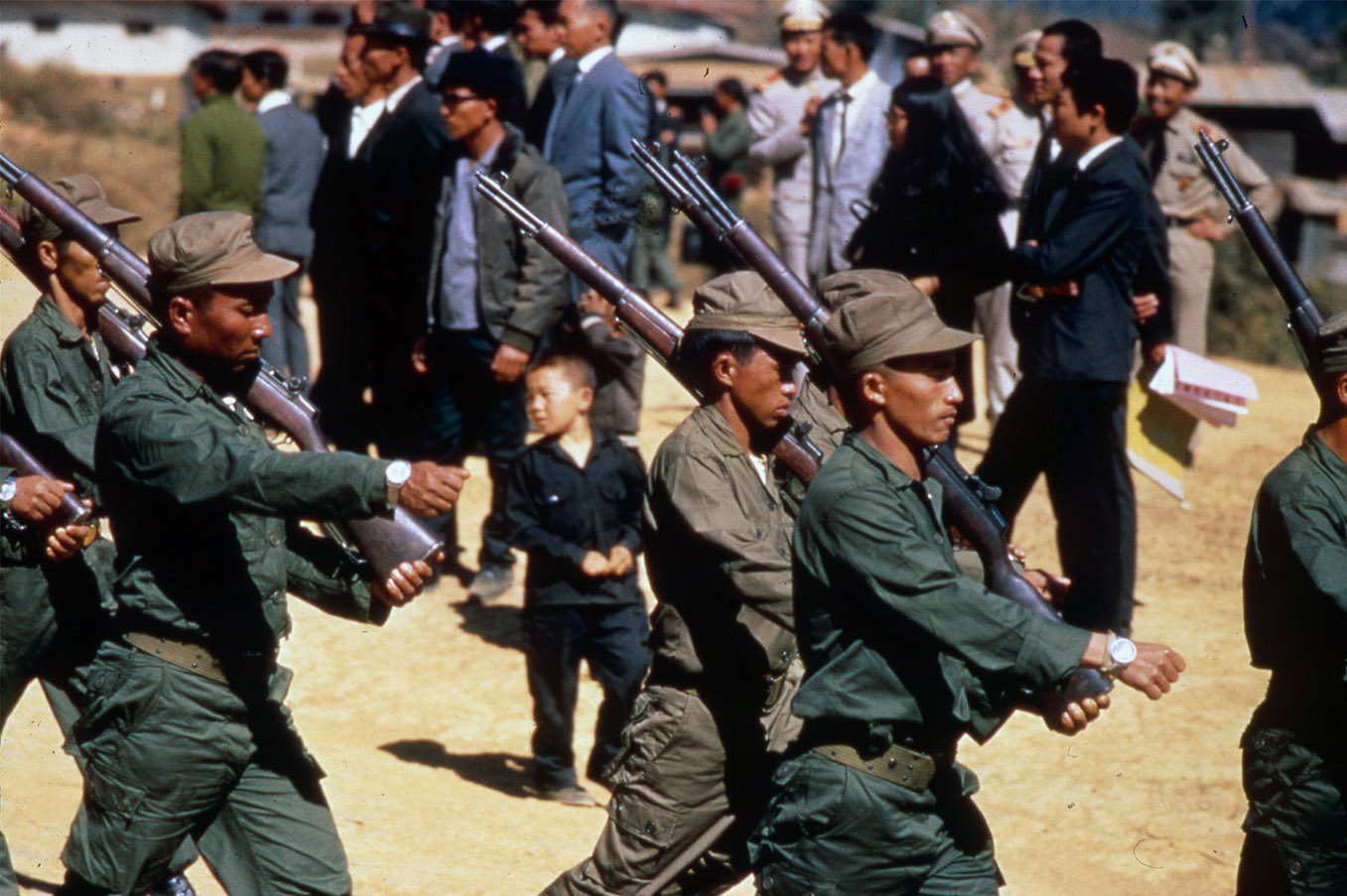
Hmong soldiers marching. Up to 30,000 ethnically Hmong soldiers were enlisted under Vang Pao.
While college-aged Americans were able to be exempted from the draft, Hmong men who studied abroad in France and the U.S. were pushed into military roles, due to there being no other option for occupation. Thus, a key difference in rationale between the two groups lay in the concept of choice. American pilots, many of whom were officers rather than conscripted men, had voluntary paths into aviation, choosing it out of personal ambition, desire for action, or social influences. For Hmong men, becoming a pilot was seen as a necessity. Koua Xiong bluntly states, “If you do not become a pilot, you’d still have to be a soldier. That’s because you couldn't do anything else.” Aviation, then, was compelling to Hmong pilots through a mix of aspiration and necessity—offering occupational security, protection from the dangers of ground combat, and a rare opportunity for socioeconomic advancement out of rural poverty.