
The Faculty Front: Antiwar Dissent from Within the Ranks
A Dartmouth Vietnam Project Digital Exhibit by Nora Cai '27
When you recall the era of antiwar protest at Dartmouth during the Vietnam War, perhaps the 1969 Parkhurst Occupation comes to mind, or the acronym “SDS” (Students for a Democratic Society) for the student organization that led it.

SDS-led Parkhurst Hall Occupation, 1969.
Rightly so, collective antiwar opposition at Dartmouth is remembered as a movement driven largely by its students. Throughout the late 1960s and early 1970s, students relentlessly initiated rallies, strikes, and other acts of protest demanding an end to Dartmouth’s ROTC program and the death-dealing Vietnam War abroad.
But buried within these recollections is a less well-historicized front of the antiwar cause: faculty at Dartmouth. This constituency—albeit not nearly a majority, nor solely responsible for the era’s institutional change—coalesced, organized, and even spearheaded acts of antiwar dissent in myriad and impactful ways. This exhibit, “The Faculty Front,” undusts the archives of the rebellious faculty during this time, a provocative cohort of self-proclaimed troublemakers who took antiwar dissent as seriously as their professional careers.

A banner is held up on the steps of Parkhurst Hall stating: "Faculty and students say 'No' to the ROTC."
While recognizing the role of faculty is not essential to granting credence to the antiwar movement, including them in our collective memory reminds us that the faculty were not merely a bystander nor the occasional participant of the times. Instead, faculty at Dartmouth represented an oppositional force in their own right, as they led, guided, and collaborated with students to propel the antiwar cause.
Who were the antiwar faculty at Dartmouth College?
In Professor Gene Garthwaite’s 2015 oral history interview with the Dartmouth Vietnam Project, Garthwaite describes being part of an “antiwar group” within the History Department during this time:

Professor Jonathan Mirsky, Associate Professor of History and Chinese at Dartmouth College, 1966-1975

Professor Carolyn Eisenberg, Assistant Professor of History and Urban Studies 1971-1975
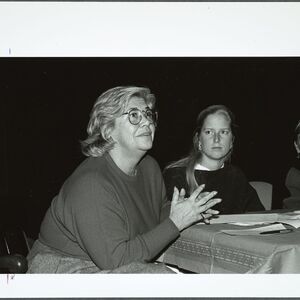
Professor Marysa Navarro-Aranguren, Professor Emerita of History, 1968-2010
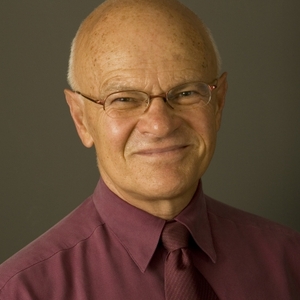
Professor Leo Spitzer, Professor Emeritus of History, started 1967
Professor Garthwaite’s emphasis on each faculty member’s academic specializations exemplifies how faculty at the time did not view their academic engagements as insulated from politics on the ground. Instead, the “internationalist” nature of their expertise was a defining aspect of each member’s contribution to the antiwar group. To learn more about how such expertise became contributions, visit the Alternative Education page of this exhibit.
It’s also quite interesting to hear Professor Garthwaite reference the antiwar faculty as a collective first-person “we.” His personal identification with the group reflects how the antiwar cause was not only a unifying political view but a source of affinity and connection amongst faculty at the time. He continues:
One of the members of this quasi-group, Professor Marysa Navarro-Aranguren cites these political discussions in her own oral history, describing how the faculty constantly held preparatory meetings in the Collis Common Ground to discuss their plans for activism.
These professors’ proactive, structured engagement in antiwar politics reveals how faculty involvement in this era extended far beyond their incidental presence at antiwar protests. Instead, antiwar dissent on the faculty front was a hub of community, socializing, and political activism, propelled by a core of organized faculty that mobilized around the antiwar cause.
The History Department’s antiwar group was only one such example; opposition to the Vietnam War found solidarity amongst faculty across departmental lines. To learn about how these faculty mobilized—from leveraging civil disobedience to teach-ins—click through the remainder of “The Faculty Front.”